HOMEOWNERSHIP PROGRAM
Decent shelter is something we all need to thrive
Habitat for Humanity of North Idaho has been providing a hand up for Kootenai County families in need of decent, affordable housing since 1988. Our affordable Homeownership Program could help YOU become a homeowner. Your family partner qualification is determined by meeting three criteria: need, ability to pay, and willingness to partner.
Housing Program FAQs
FAQs
What is the Housing Program?
Habitat for Humanity of North Idaho is the local Habitat Affiliate serving low to medium income residents of Kootenai County. Through volunteer labor, community partnerships, and donor support, we provide affordable homeownership opportunities through both new home construction and the rehabilitation and resale of existing homes within our program.
What kind of housing do you build?
As land and construction costs continue to rise in Kootenai County, Habitat for Humanity of North Idaho is committed to finding ways to keep homeownership as affordable as possible. To help reduce the cost per housing unit, we primarily build condo-style homes and also offer existing homes within our program as they become available. Condo-style housing allows us to serve more families while still providing the benefits of homeownership. Owners have their own individual living space while sharing responsibility for common areas within the development.
What do I have to do to get housing from Habitat for Humanity of North Idaho?
Habitat homeowners partner with us throughout the homeownership process by completing Sweat Equity hours and preparing financially for homeownership. Every adult in the household is required to complete 250 hours of Sweat Equity through activities such as volunteering on build sites, helping at Habitat events or the ReStore, attending financial education classes, and participating in first-time homebuyer education. Children are encouraged to help where appropriate as well. Applicants must also be able to qualify for an affordable mortgage, which includes demonstrating stable income, reasonable credit history, and the ability to make monthly mortgage payments.
Who qualifies for the new construction Homeownership Program?
Home Candidate qualification is based on three criteria: Need, Ability to Pay, and Willingness to Partner.
NEED:
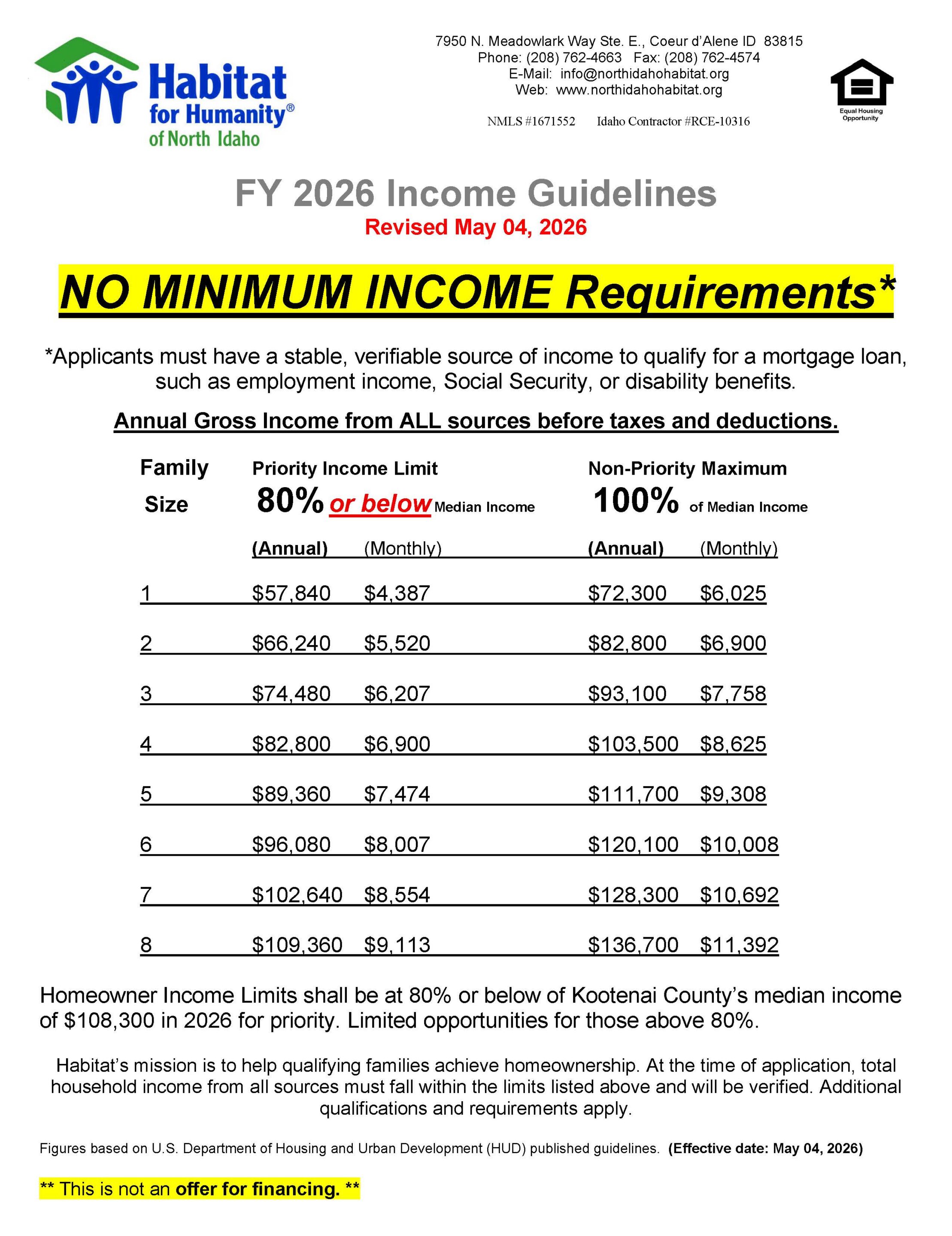
Applicants must demonstrate that their current housing situation is inadequate, unsafe, overcrowded, unhealthy, or unaffordable. Priority consideration is given to households earning at or below 80% of the Kootenai County Area Median Income (AMI), though some households earning up to 100% AMI may also be considered depending on program availability and funding guidelines. Income limits are based on household size. (See chart above.)
ABILITY TO PAY:
Applicants must demonstrate the ability to afford a monthly mortgage payment in addition to their current financial obligations. Monthly housing costs may include mortgage payments, homeowners insurance, property taxes, and homeowner association fees (if applicable). This requires stable income, reasonable debt management, and satisfactory credit history.
WILLINGNESS TO PARTNER:
Habitat Home Candidates are active participants in the program and are required to complete 250 Sweat Equity hours over approximately 12–18 months. This may involve 20-40 hours per month of extra work in addition to your current employment. Sweat Equity may include volunteering on construction sites, helping at Habitat events or the ReStore, attending homeowner education classes, and other approved volunteer activities. This partnership gives families the opportunity to help build their future home alongside volunteers and become fully engaged in the path to homeownership.
NMLS ID# 1672570
Non-Discrimination Policy: Habitat commits to treating all applicants in an equal manner. The following attributes will NOT factor into any action for the Habitat homeownership program, including information-sharing, distributing applications, advertising or evaluating applications: race, color, national origin, religion, sex, familial or marital status, disability, sexual orientation, age (provided the applicant can legally enter into a contract), income derived from public assistance, or a consumer who has, in good faith, exercised any right under the federal Consumer Credit Protection Act.